Travel Security Guide Review for Safer Trips
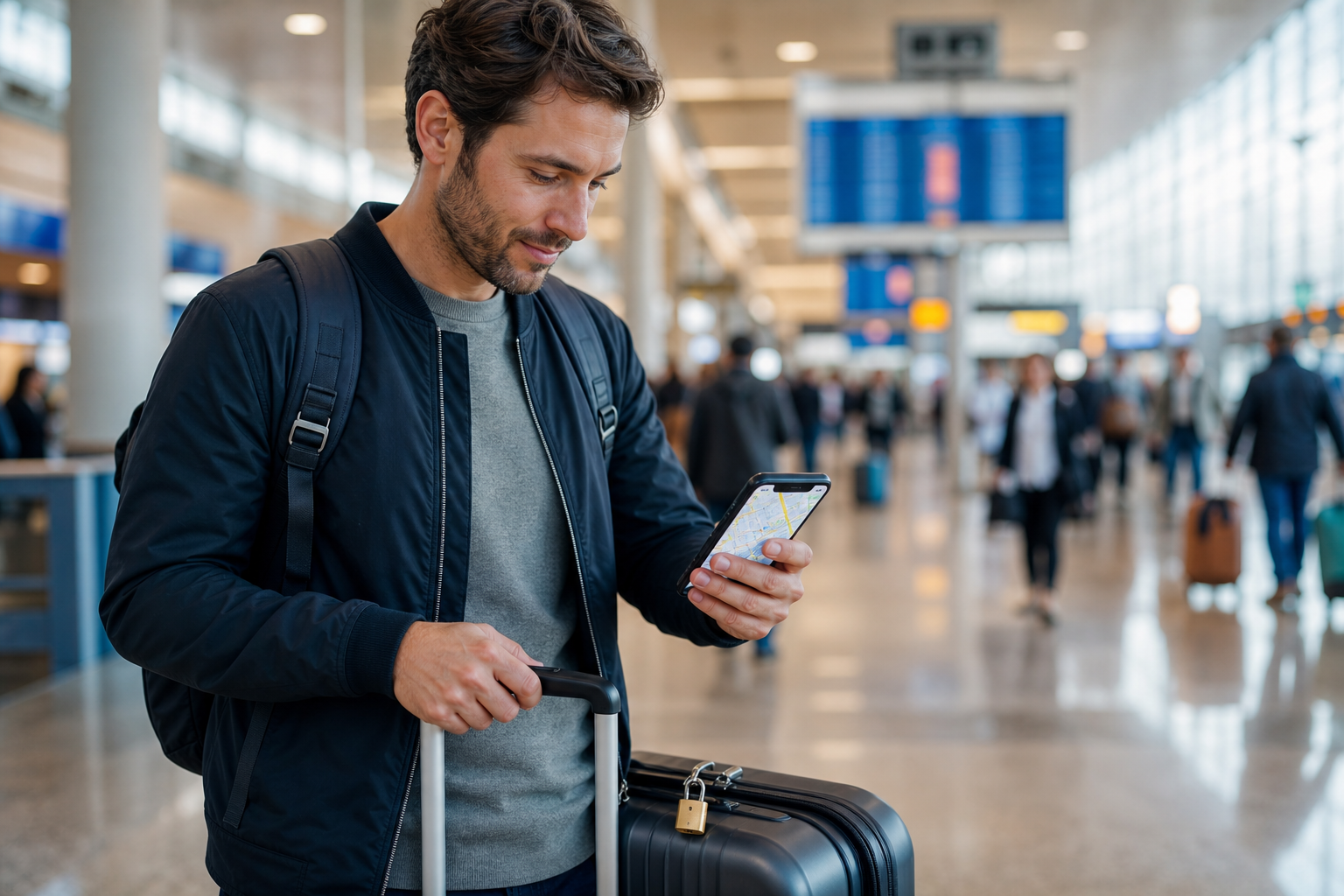
Traveling in 2026 feels easier than ever, but it also comes with risks many travelers underestimate until something goes wrong. Crowded airports, rideshare confusion, public Wi-Fi, unfamiliar ATMs, street vendors, hotel check-ins, and online booking platforms all create moments where visitors can be distracted or targeted. This review looks closely at a digital travel security guide built for tourists, solo travelers, families, digital nomads, business travelers, and students preparing for trips in unfamiliar places.
Introductory illustration
Instead of treating safety like a scary checklist, this resource focuses on awareness, preparation, and calm decision-making. It is not written for security professionals. It is written for everyday travelers who want practical, easy-to-remember advice before stepping into a new city, airport, hotel lobby, train station, or busy market.
What This Travel Security Guide Covers
Main value of this guide comes from its broad but practical coverage. It does not stay limited to one type of travel risk. It looks at common situations where travelers often feel rushed, distracted, or unsure what is normal. That includes transportation, money handling, accommodations, public spaces, and personal information.
Core sections focus on how scams work, why travelers are often targeted, and how small habits can prevent major problems. This matters because many scams do not look suspicious at first. They often begin with a friendly question, an urgent request, a fake offer, or confusion around pricing. Good travel safety starts before those moments escalate.
Key Topics Included
- Tourist scam prevention in crowded attractions, markets, and transit areas.
- Solo travel safety habits for people navigating unfamiliar places alone.
- Travel safety tips for taxis, airports, hotels, ATMs, and vendors.
- Digital travel safety for bookings, public Wi-Fi, mobile payments, and personal data.
- Personal safety planning for what to do before, during, and after a risky situation.
Who Should Read This Guide?
This guide is useful for a wide range of U.S. travelers, especially those planning international trips or visiting large cities for the first time. It fits solo travelers who want more confidence, parents planning family vacations, study abroad students, digital nomads working from different countries, and professionals moving quickly between airports, hotels, and meetings.
Business travelers may find the transportation and hotel sections especially useful. When trips are rushed, safety details are easy to overlook. A tired traveler arriving late at night may accept the wrong taxi, use an unsafe ATM, or connect to unsecured Wi-Fi without thinking. This guide helps turn those moments into quick, safer decisions.
Families also benefit because the advice is simple enough to discuss before a trip. Parents can use it to create shared safety habits without frightening kids. For example, agreeing on meeting points, keeping valuables out of sight, checking hotel room security, and knowing how to leave a pushy vendor interaction can make travel smoother.
Real-World Scam Awareness: Strongest Part of The Guide
Best feature of this travel security guide is its use of real-world examples. Generic advice like “be careful” does not help much when someone is standing in front of you with a clipboard, offering a bracelet, insisting a taxi meter is broken, or claiming your ticket is invalid. Specific examples help travelers recognize patterns before they become costly mistakes.
The scam awareness section explains how travelers can be pressured through distraction, urgency, politeness, confusion, or embarrassment. This is important because scams often rely less on force and more on social pressure. A traveler may pay extra, reveal information, or follow a stranger simply because they do not want to seem rude.
Practical scenarios covered include fake ticket sellers, dishonest taxis, distraction tricks near tourist attractions, ATM interference, pushy vendors, hotel booking concerns, and airport fraud. For travelers heading to Europe, Asia, Mexico, or major U.S. cities, these examples feel realistic and easy to apply.
Good travel safety is not about assuming everyone is dangerous. It is about recognizing when a situation feels rushed, unclear, or designed to separate you from your money, belongings, or personal information.
Transit Safety: Airports, Taxis, Rideshares, and Train Stations

Detailed illustration
Transit is one of the highest-risk parts of a trip because travelers are often tired, carrying luggage, and trying to move quickly. This guide gives clear advice on how to avoid common transportation problems without overcomplicating the process.
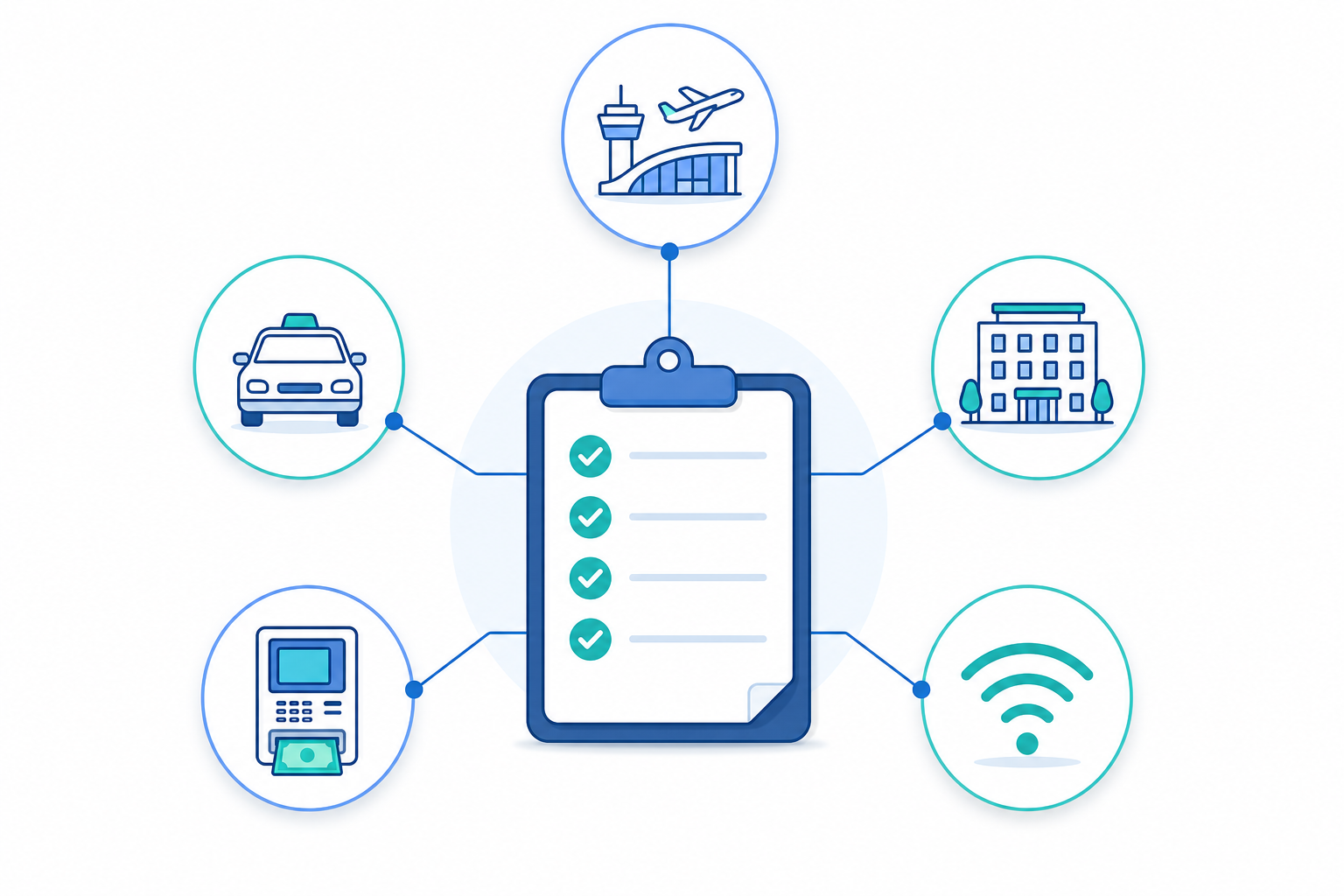
For airports, it highlights risks like unofficial drivers, fake assistance, luggage distractions, and confusing payment demands. For taxis and rideshares, it encourages travelers to confirm vehicle details, agree on pricing rules when needed, use official apps or stands, and avoid drivers who create pressure or refuse standard procedures.
Train stations and bus terminals receive attention too. These spaces can be confusing, noisy, and crowded, making them ideal for distraction-based scams. Advice here focuses on keeping bags secure, avoiding unnecessary help from strangers, checking tickets through official channels, and pausing before responding to urgent claims.
Hotel and Accommodation Safety
Hotel safety often gets ignored because hotels feel controlled and professional. But travelers can still face risks during booking, check-in, room access, luggage storage, and public lobby use. This guide encourages basic but effective habits: confirm bookings through reliable platforms, avoid sharing room numbers out loud, check door locks, use safes thoughtfully, and keep valuables organized.
For U.S. readers used to familiar hotel systems, international lodging can feel different. Smaller properties, guesthouses, apartment rentals, and boutique hotels may use different check-in methods. This guide helps travelers stay polite while still protecting privacy and security.
ATM, Money, and Personal Information Protection
Money safety section is practical and easy to apply. It covers ATM precautions, card handling, cash separation, and awareness around crowded payment areas. Rather than advising travelers to avoid all risks, it suggests smarter routines: use ATMs in secure locations, shield PIN entry, check machines before use, avoid displaying large amounts of cash, and carry backup payment options separately.
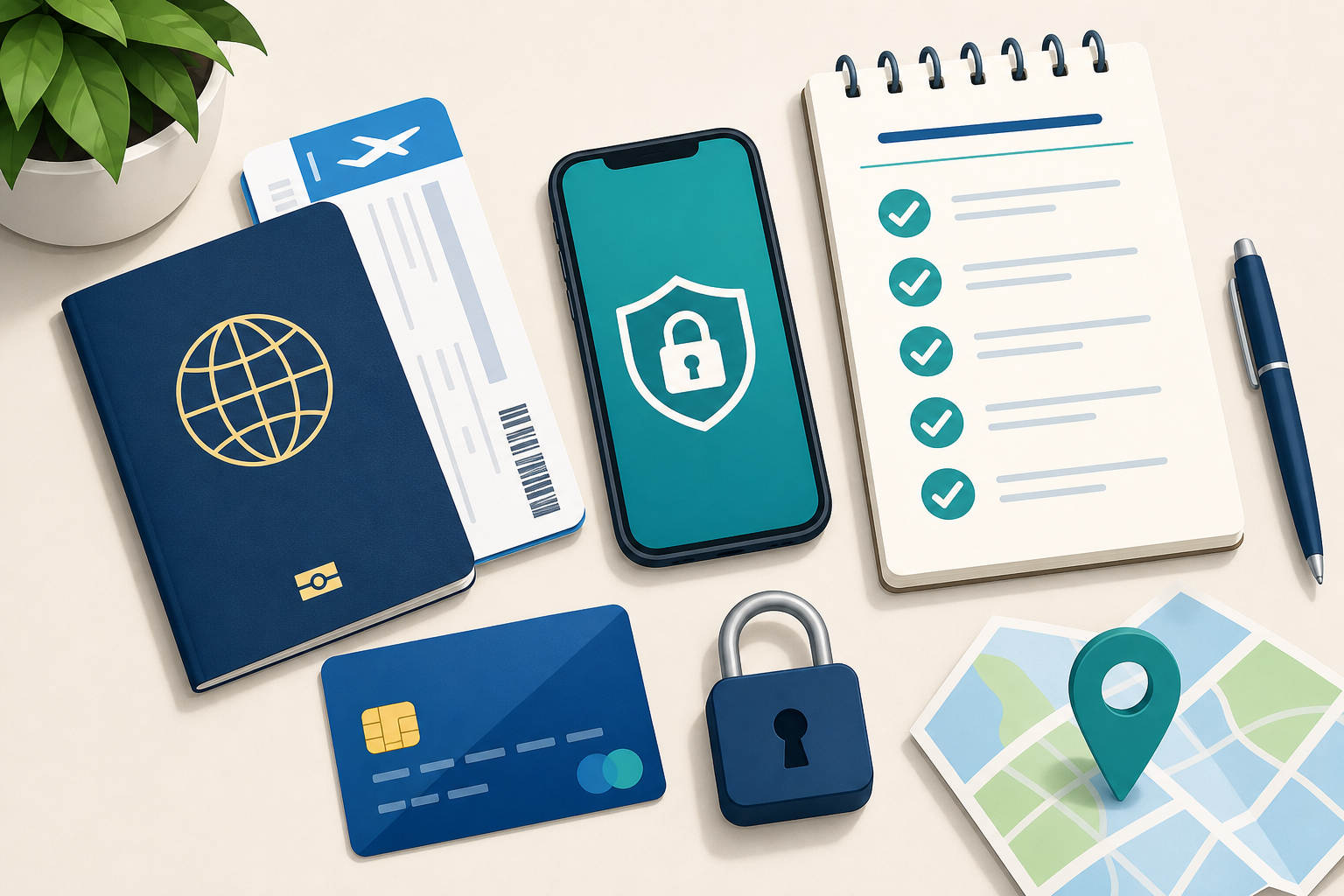
Personal information protection also matters. Passports, IDs, credit cards, travel confirmations, and phone access can create problems if lost or exposed. The guide encourages travelers to think beyond physical theft and consider account access, booking details, and digital records.
Digital Travel Safety for Modern Trips
Modern travel depends heavily on phones. Boarding passes, hotel reservations, maps, banking apps, rideshares, translation tools, and messaging all live on one device. That convenience creates risk. This guide includes digital travel safety advice that feels relevant for today’s travelers.
It discusses public Wi-Fi caution, safer online bookings, mobile payment awareness, and protecting personal data while abroad. For digital nomads and business travelers, this part is especially valuable. A compromised device or account can disrupt far more than one vacation day.
Some readers may want deeper coverage of cybersecurity tools, VPN use, password managers, and travel-specific privacy settings. Still, for a general traveler safety resource, the digital section gives a strong foundation without becoming too technical.
Personal Safety Plan Template
Related context illustration
The included personal safety plan template makes this guide more useful than a typical article. Templates help travelers turn advice into habits. A good plan might include emergency contacts, local embassy details, backup payment locations, hotel address, transportation rules, meeting points, and what to do if phone, wallet, or passport is lost.
This is especially helpful for solo travelers. When traveling alone, no companion is there to notice missed details or help make decisions under stress. Having a plan reduces panic and supports faster action. The guide’s template appears designed to be simple enough to complete before departure and practical enough to revisit during the trip.
Reading Experience and Usability
This resource is easy to read, which is one of its biggest strengths. Many safety guides become too technical, too alarming, or too vague. This one uses direct language and practical examples. That makes it suitable for first-time travelers and experienced travelers who want a refresher before a major trip.
Digital format is another benefit. A PDF guide can be saved on a phone, tablet, or laptop and reviewed before a flight, in a hotel room, or while planning daily routes. For quick reference, a few more visuals or checklists could make it even stronger, but core content remains useful and accessible.
Pros and Cons
Pros
- Practical examples make scam recognition easier.
- Clear tone supports confidence instead of fear.
- Useful for solo travelers, families, students, business travelers, and digital nomads.
- Covers transportation, hotels, ATMs, vendors, personal data, and safety planning.
- Digital format makes it portable and easy to revisit.
Cons
- Could include more diagrams or quick-reference visuals.
- Digital scam coverage could go deeper for advanced users.
- Destination-specific examples may still require extra local research.
Final Verdict: Is This Travel Security Guide Worth It?
This travel security guide is worth reading for anyone who wants safer, calmer, and more confident trips. Its biggest strength is not fear-based warning. Its strength is practical awareness. It helps travelers understand how common scams unfold, what to watch for, and how to respond without panic.
For U.S. travelers planning international vacations, solo adventures, business trips, study abroad programs, or long-term remote work, this guide can serve as a compact safety toolkit. It will not replace common sense, local research, travel insurance, or emergency planning, but it gives clear habits that can prevent avoidable trouble.
Best fit is traveler who wants useful travel safety tips without reading a long technical manual. If peace of mind matters as much as itinerary planning, this guide earns a place on pre-trip checklist.









Leave a comment